By Leah Wanjiru Muiruri
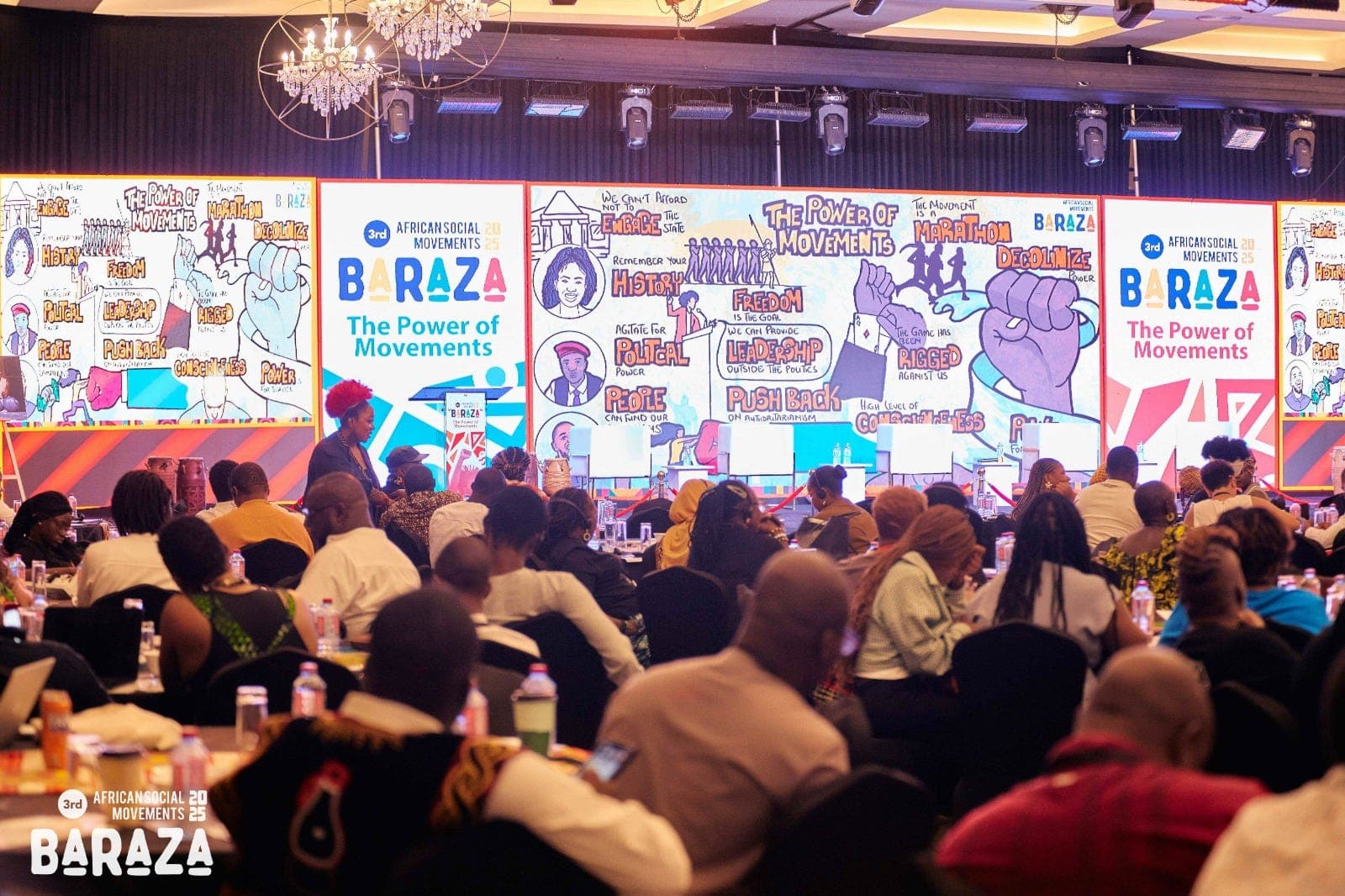
Niaje wasee? As we celebrated the #AfricaDay2025, I can’t help but reflect on what it meant to be part of the Africa Social Movement Baraza 2025, a fire convening of movement leaders from 34 countries. Hosted in Accra, Ghana, this was not just a networking event. It was a call to action. A
vibe. A movement.
From the onset, the energy was high. And not just because we were in the city where the hustle never sleeps, but because everyone there came with a shared hunger: how do we move Africa forward, together? Catch Feelings, Then Catch Fire: Why Reparations Still Matter
One of the most powerful panels was led by Kim Poole, founder of the Teaching Artist Institute. She dropped heavy truths on reparatory justice , not just as a historic demand, but as a movement strategy. Think: creating “liberated zones,” where communities can heal, rebuild, and thrive. It’s not just about the past. It’ s about fixing the future.
Self-Healing, Class Struggles & Seizing Our Moment
Another session that hit home was titled “Seizing the Moment”. Speakers like Phumi Mtetwa (JASS)- Just Associate reminded us that social movements must stop treating identity and class as afterthoughts. If your activism ignores economic inequality or refuses to name the burden women and youth carry, you’re not building a revolution. You’re just hosting a meeting.
And that’s why we must keep asking the big, painful questions:
Why are our movements so fragmented?
Who’s being left behind?
And what does it really mean to build power together?
From Detention Cells to Hashtags: Speak Truth, Speak Loud
Even as we gathered, news broke about the detention of activists in Tanzania. That shook the room. Because when civic space shrinks in one corner of Africa, the whole continent bleeds.
We can’t shout about Pan-Africanism and then go mute when our own are silenced. Solidarity is not just about tweets , it’s about action. Advocacy. Showing up.
Youth Voices Must Be Heard, From SRHR to Bunge
As a pan-African feminist, mental health advocate, and SRHR champion, I know firsthand how often youth are sidelined in conversations that directly affect us.
It’s time to normalize youth speaking up, not just about sexual and reproductive health and rights (SRHR), but also about governance, leadership, and funding equity. We can’t build movements for youth without youth.
Real Talk: Africa is Not a Charity Case
We need to kill the tired narrative. Africa is not a place to pity. It’s a place to partner with. A continent with 54 countries, over 3,000 languages, and mad innovation, from mobile banking to clean energy.
As one speaker put it: “Any serious businessperson not thinking about Kenya, Ghana, or Africa is playing themselves.” And they’re right. We’re not asking for handouts, we’re asking for handshakes.
So What Next? Let’s Talk Solutions
Briggs Bomba, Programmes Director, Trust Africa opened the Baraza by naming the moment we’re in, a compound crisis. The solution? Dual vision:
Outward: Envisioning a just, radical African future.
Inward: Healing ourselves and each other.
It’s not just about knowing the system. It’s about beating it, reimagining it, and building better.
Before You Bounce, Think About This:
How can movements defend democracy when it’s being dismantled from within?
How do we stay woke and self-reliant in an unstable funding landscape?
About Author
Leah Wanjiru Muiruri is a pan-African feminist, SRHR advocate, and mental health champion based in Nairobi. She has over nine years of experience working at the intersection of youth advocacy, policy
influence, and social movement building across East Africa. Leah currently serves as a Program Officer at NairoBits Trust, where she leads digital inclusion and gender justice programming.